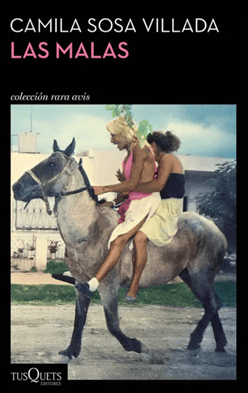
Sobre “Las Malas” de Camila Sosa Villada / On “Bad Girls” by Camila Sosa Villada
Sosa Villada, C. (2019). Las malas. Tusquets Editores.
BOOKS
Este libro me significó volver a sumergirme en la lectura y olvidar los espacios de mi propia realidad. Estaba deseando un libro que me hiciera sentir así hace mucho tiempo.
Quizá por eso me gustó tanto y me sentí tan cómoda en este libro. Porque se siente genuino, como una conversación que me están contando en la cocina de la Tía Encarna. La Tía Encarna, personaje del libro, quien hace de madre.
Me impactó darme cuenta que no conocía nada sobre la experiencia trans. Tan duros los relatos de violencia, de abuso emocional y sexual, del desprecio de la sociedad y sus guardias de la moral, los policías, de exclusión. Cuentan que es tan fuerte la exclusión que la única alternativa de sustento se vuelve, por deseo o por obligación, el trabajo sexual. Un mes de terminar el libro, escuché por casualidad la historia de Cindy Núñez, una mujer trans de Bogotá que se fue a vivir a Italia sin saber el idioma, para vivir del trabajo sexual. Esta historia la escuché en el podcast No hay banderas en Marte, capítulo 119. La historia de Camila Sosa Villada y Cindy Núñez era la misma.
La autora hace un uso del lenguaje de una manera tan poética y hermosa como una filigrana. Lo que lo hace más encantador es que dice frases bellas dentro de la narración como si fueran palabras más, palabras menos. Y es como si no se diera cuenta que está recitando un poema mientras cuenta un cuento. Hace que uno se detenga en la lectura y repase la frase una y otra vez.
Otro detalle que me gusta es lo surrealista que se hace el libro. Como la imagen de la Tía Encarna cuidando al Brillo de los Ojos; una travesti de retaguardia y un niño abandonado en el parque. Como si fueran la Virgen María y El Niño Dios. O la mujer que se convierte en pájaro y así se queda y alguien más tiene que alimentarla.
Siento que al leer este libro también hubo una transformación para mí. A través de otras experiencias de mujeres entiendo más lo que es ser mujer, por más abstracto que esto suene. El espectro de ser mujer se amplía. También entendí lo que es abrirse a lo más diferente, es dejar que la forma de uno se acomode a las formas de otros, y así una misma toma otras formas.
Frases o apartes que me gustaron del libro:
“El Hombre Sin Cabeza apareció como una prolongación de la sombra que lo ocultaba” (Pág. 39) Pude imaginarme esto como una escena de film noir
“El Hombre Sin Cabeza también tenía talento para la guitarra. Y demoraba nuestra partida al Parque cuando se ponía a tocar canciones tristes que nos hacían llorar lágrimas de mujer y preguntarnos por qué era tan larga la noche”. (Pág. 42) Sin poder definir qué son lágrimas de mujer, lo entiendo
“A los dieciséis se había escapado de un correccional de menores saltando por los techos como un demonio confundido y se había hecho prostituta por instinto”. (Pág. 51) Otra cosa que, sin poder definir, entiendo.
“Un hombre así, que venía con su sueldo en la mano, dispuesto a entregarlo todo, tan dulce y amargo como una fruta del trópico”. (Pág. 102) Viniendo yo del trópico, aprecio todas las nuevas definiciones de ese lugar surreal
“Cada uno de los golpes que se sumaban a los que nos habían propinado nuestros padres para revertirnos, para llevarnos de regreso al mundo de los normales, los correctos, los que forman familias y tienen hijos y aman a Dios y cuidan su trabajo y hacen rico al patrón y envejecen al lado de sus esposas. La furia contra el silencio y la complicidad de nuestras madres en el desprecio sistemático de nuestra existencia”. (Pág. 154)
“Para morir se debe preparar la casa, recibir al niño que supimos ser”. (Pág. 162)
“...ejerzo mi derecho a alejarme de la tristeza…” (Pág. 191)
Gracias Camila Sosa Villada por encantarme con palabras.
★★★
This book meant to me to dive back into reading and forgetting about my own reality. I had been longing for a book that would make me feel this way for a long time.
Maybe that's why I liked it so much and felt so comfortable with this book. Because it feels genuine, like a conversation I'm having in Aunt Encarna's kitchen. Aunt Encarna, a character in the book, who acts as a mother figure.
I was shocked to realize that I knew nothing about the trans experience. The stories of violence, emotional and sexual abuse, contempt from society and its moral guardians, the police, and exclusion are so harsh. They say that the exclusion is so strong that the only alternative for economic sustenance becomes, by choice or by obligation, sex work. A month after finishing the book, I happened to hear the story of Cindy Núñez, a trans woman from Bogotá who went to live in Italy without knowing the language, to make a living from sex work. I heard this story on the podcast No hay banderas en Marte, episode 119. The stories of Camila Sosa Villada and Cindy Núñez were the same.
The author uses language in a way that is as poetic and beautiful as filigree. What makes it even more delightful is that she uses beautiful phrases within the narrative as if they were just regular words. And it's as if she doesn't realize that she's reciting a poem while telling a story. It makes you stop reading and go over the phrase again and again.
Another detail I like is how surreal the book becomes. Like the image of Aunt Encarna caring for Brillo de los Ojos; a transvestite in the background and an abandoned child in the park. As if they were the Virgin Mary and the Baby Jesus. Or the woman who turns into a bird and stays that way, and someone else has to feed her.
I feel that reading this book also transformed me. Through other women's experiences, I understand more what it means to be a woman, as abstract as that may sound. The spectrum of being a woman broadens. I also understood what it means to open oneself up to what is most different, to let one's own form accommodate the forms of others, and thus take on other forms oneself.
Phrases or passages I liked from the book (not from an official translation):
“The Headless Man appeared as an extension of the shadow that hid him” (p. 39). I could imagine this as a scene from a film noir.
“The Headless Man also had a talent for the guitar. And he delayed our departure to the park when he started playing sad songs that made us cry women’s tears and wonder why the night was so long.” (p. 42) Without being able to define what women's tears are, I understand.
“At sixteen, she had escaped from a juvenile detention center by jumping across rooftops like a conflicted demon and had become a prostitute by instinct.” (p. 51) Another thing that, without being able to define it, I understand.
“A man like that, who came with his paycheck in hand, willing to give it all away, as sweet and bitter as a tropical fruit.” (Page 102) Coming from the tropics myself, I appreciate all the new definitions of that surreal place
"Each of the blows that added to those our parents had dealt us to turn us around, to bring us back to the world of the normal, the correct, those who form families and have children and love God and take care of their work and make their boss rich and grow old alongside their wives. The fury against the silence and complicity of our mothers in the systemic contempt for our existence." (Page 154)
“To die, one must prepare the house, welcome the child we once were.” (Page 162)
“...I assert my right to distance myself from sadness...” (Page 191)
Thank you, Camila Sosa Villada, for enchanting me with words.
Laura M. Cañas P. © 2025. All rights reserved.